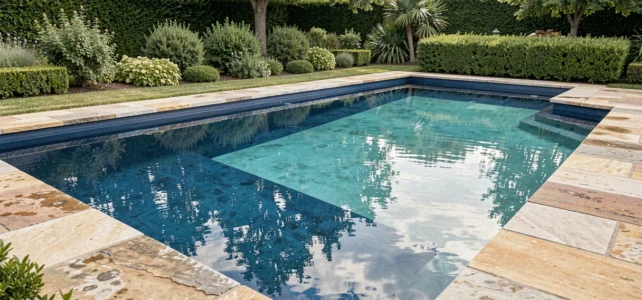
The color of a pool shell determines the perceived hue of the water, the ambiance of the garden, and, in the long term, the frequency of maintenance for the pool. The choice is made from a catalog with most manufacturers, but the actual result depends on parameters that few buyers anticipate: solar exposure, pool depth, surrounding materials, and daily use.
A white gel coat does not produce the same blue depending on whether it lines a flat family bottom or a narrow swimming lane. Understanding these interactions before finalizing a shade avoids lasting regrets.
Pool shell color and pool usage: the criterion that catalogs do not show
Manufacturers’ color charts present dry samples, photographed in a studio. The problem is that the final color of the water results from the interaction between the gel coat, water depth, natural light, and reflections from the surrounding decor. The same anthracite gray color will appear almost black in a shallow pool surrounded by dark walls, and much softer in a pool open to a light garden.
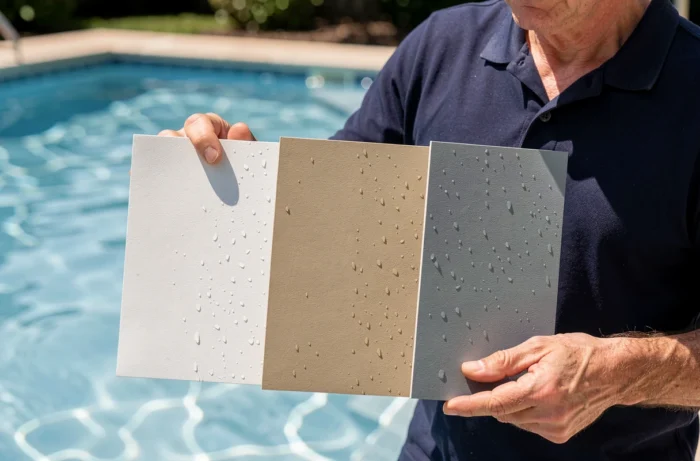
Experts recommend comparing wetted samples in natural light, and if possible, visiting actual installations at various times of the day. A dry sample or a retouched photo does not reflect the actual behavior of the shade in the water. This is a point that field feedback increasingly emphasizes, motivating many professionals to offer visits to completed sites before color validation.
Several owners sharing advice on pool shell color confirm that the gap between the expected shade and the obtained shade remains the primary source of disappointment, far ahead of shape or size issues.
Choosing the shade of your shell according to actual use: family swimming, swimming, relaxation, or mirror pool
The use of the pool guides the color choice in a more concrete way than a simple aesthetic criterion. Each configuration modifies the water depth, the visible surface, and the ratio between the bottom and coping.
Family swimming with a flat bottom or gentle slope
A family pool accommodates children, games, and short swims. The depth remains moderate, often less than one meter fifty over a large part of the bottom. In this configuration, light colors give a bright and reassuring water: sand, off-white, or sky blue maximize the visibility of the bottom, which is also a safety factor for young children.
However, light shades reveal dirt (leaves, insects, budding algae) more quickly. Visual maintenance is more demanding, but debris is immediately noticeable, making regular cleaning easier.
Swimming lane
A swimming lane is long, narrow, with a relatively uniform depth. The larger water column intensifies the perceived color. A medium blue or gray gel coat produces in this format a marked visual depth effect, with reflections that change according to the swimming angle.
For competitive swimming, the readability of the lines and the bottom matters less than visual comfort while immersed. Medium shades (light gray, slate blue, water green) offer a good compromise between brightness underwater and absence of glare on the surface in sunny weather.
Mini-pool for relaxation or spa
Mini-pools and relaxation basins with submerged benches have a reduced water volume. The shallow depth means that the gel coat visually dominates: the chosen shade will be almost what one perceives. A dark gray or black will give a very contemporary look, but the water will appear opaque as soon as there is a bit of wind or ripples.
On these small formats, warm colors (sand, ivory, caramel) create a more enveloping atmosphere. Field feedback varies on dark shades in mini-pools: some owners appreciate the mirror effect, while others find the look too austere once installed.
Mirror pool or landscaped basin
The mirror effect sought on certain overflow basins relies on dark and perfectly still water. Dark gray or black shells maximize the reflection of the sky and vegetation. This result works provided that the environment is clear and the water surface is not constantly disturbed.
However, these dark finishes make limestone deposits more visible and require more rigorous water maintenance. The slightest white mark on an anthracite bottom can be spotted from several meters away.
Maintenance and aging of the gel coat according to the chosen color
The issue of maintenance is often relegated after aesthetics, even though it conditions long-term satisfaction. Polyester gel coat remains the standard coating for shells, and its longevity depends as much on manufacturing quality as on color.
- Light finishes (white, sand, pale blue) quickly show organic dirt but better mask limestone. Cleaning is frequent but simple.
- Medium finishes (light gray, slate blue, water green) offer the best balance between visibility of debris and discretion of mineral deposits. This is the choice that generates the least maintenance frustration over time.
- Dark finishes (anthracite, black, midnight blue) hide plant debris well but make limestone deposits very visible, which requires stricter monitoring of water balance and more frequent descaling.
The aging of the gel coat can also alter the perceived shade. Very saturated colors (bright blue, intense green) tend to lose their vibrancy after several years of UV exposure. Neutral shades and pastels maintain a more stable appearance over time.
Gel coat and sunlight: adapting the shell color to the terrain’s exposure
The orientation of the pool in relation to the sun modifies the perception of color throughout the day. A south-facing pool will receive direct and intense light that lightens the shades: a medium gray can appear almost white at noon in summer. Conversely, a north-facing pool or one partially shaded by vegetation will retain shades closer to the raw gel coat.
The reflection of the environment also plays a role. A light stone terrace, a white wall, or a blond wood deck will reflect light back into the water and make it more transparent. A surrounding of dense, dark vegetation will absorb light and darken the overall appearance.
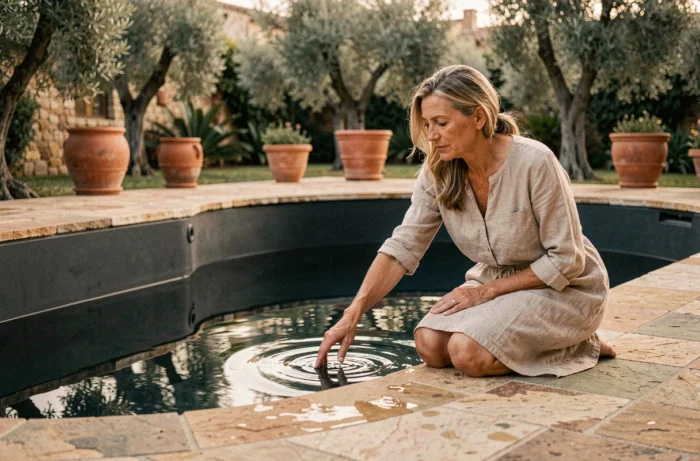
Testing the shade on-site remains the most reliable method. Professionals who offer to place a wet gel coat sample at the edge of the future pool for a full day allow for observing the actual variations in light. This step, often free of charge, avoids unpleasant surprises that neither a catalog nor a screen can anticipate.
The choice of a pool shell color commits to the lifespan of the pool, which can span several decades. Taking the time to cross-reference the intended use, maintenance constraints, and actual terrain exposure yields a result that current trends will not replace.