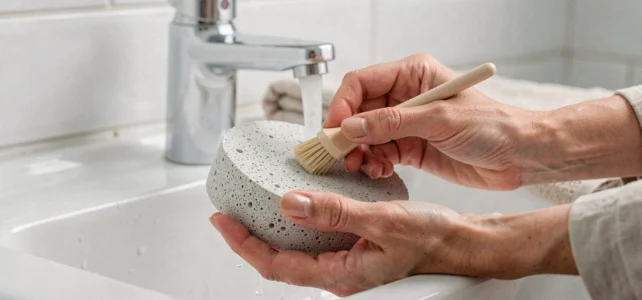
After a few uses, a pumice stone accumulates dead skin residue in its pores. This buildup, combined with moisture, creates a breeding ground for bacteria. Knowing how to properly clean your pumice stone for feet extends its lifespan and protects your skin with each use.
Why the pores of the pumice stone clog so quickly
Pumice is a volcanic rock whose surface is riddled with tiny cavities. These pores give it its abrasive power, but they also trap skin cells with every friction. The more the stone is used on thick calluses (heels, soles), the more debris gets embedded deeply.
The problem isn’t always visible to the naked eye. A stone that appears clean on the surface may store moisture and organic residue deep within its pores. A damp and poorly rinsed pumice stone becomes a breeding ground for bacteria in just a few days.
Before looking for advanced cleaning techniques, the first reflex to adopt is to properly clean a pumice stone for feet immediately after each use, without waiting for the residue to dry and harden in the cavities.
Daily cleaning of the pumice stone after each use
Have you noticed that skin debris is easier to remove when the stone is still damp? This is the time to act, right after foot care.
Immediate rinsing and brushing
Run the stone under a stream of warm water while scrubbing it with an old toothbrush. The soft bristles penetrate the cavities and dislodge the trapped residue. Focus on the areas that have worked the hardest, usually the center of the abrasive face.
Always scrub in the direction of the pores, not in circles. A circular motion pushes the debris deeper instead of extracting it.
Complete air drying
Once rinsed, place the pumice stone in a ventilated area, away from the shower or bathtub. The goal is to eliminate any trace of moisture before the next use. Never store the pumice stone in a closed cabinet while it is still damp.
This complete air drying is the simplest and most effective hygiene measure to limit bacterial proliferation between uses.
Deep cleaning with everyday products
Rinsing after each use is sufficient for daily care. A more thorough cleaning, to be done once a week or every two weeks depending on usage frequency, helps to deeply unclog the pores.
Soaking in soapy hot water
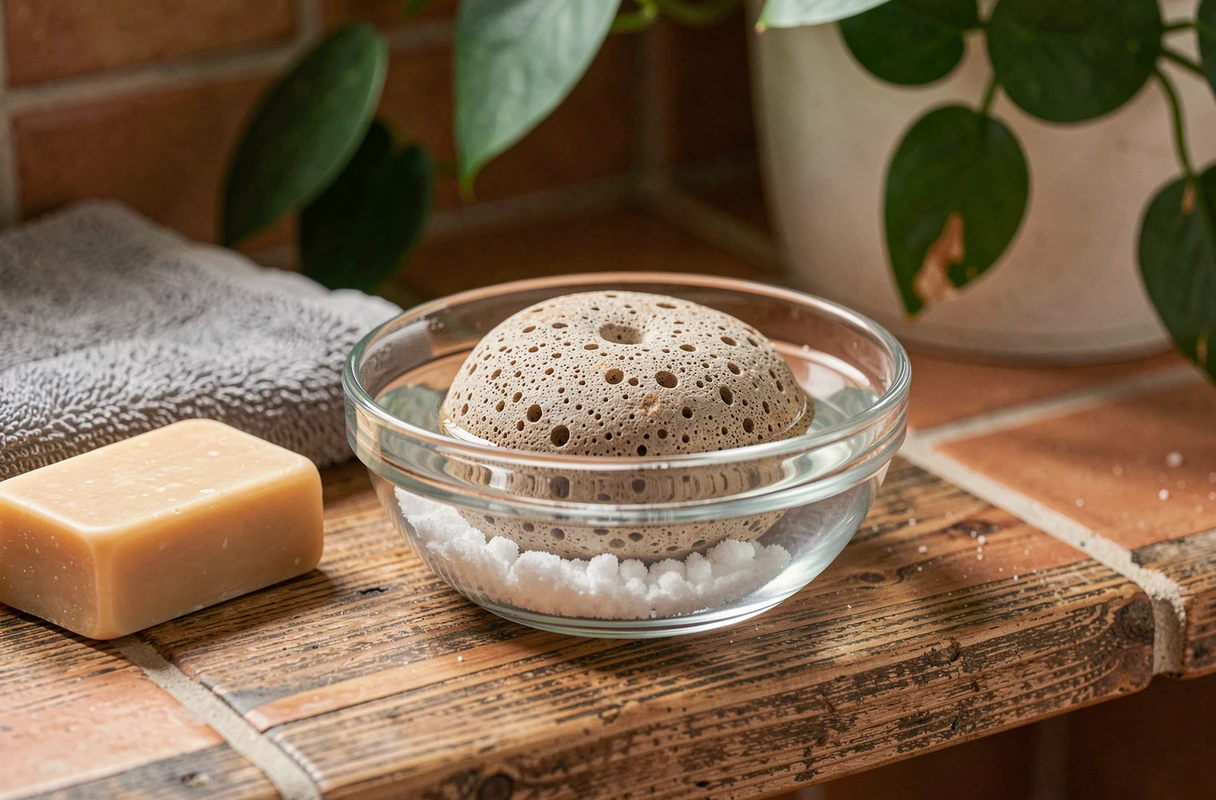
Fill a bowl with hot water and add a few drops of liquid soap or dishwashing liquid. Submerge the pumice stone and let it soak for about fifteen minutes. The heat softens the stuck residue, and the soap loosens it.
After soaking, take the toothbrush again and scrub each side. Rinse thoroughly with clear water to remove any soap residue, which could irritate the skin during the next care.
Disinfection with white vinegar or baking soda
For a more thorough disinfection, two common options work well:
- Diluted white vinegar: soak the stone in a mixture of half water and half white vinegar for about ten minutes, then brush and rinse.
- Baking soda: make a thick paste with baking soda and a little water, apply it to the stone, let it sit for a few minutes before scrubbing and rinsing.
- Boiling water alone: if you have neither vinegar nor baking soda, a simple soak for a few minutes in very hot water (not boiling to avoid damaging some synthetic stones) helps to disinfect.
White vinegar neutralizes persistent odors that soap alone may not always eliminate.
Worn pumice stone: signs that it needs to be replaced rather than cleaned
Regular cleaning extends the life of the stone, but there comes a time when no soaking is enough. Recognizing this moment prevents you from using a tool that has become counterproductive or even risky for the skin.
Smooth or crumbling surface
When the abrasive texture of the stone noticeably decreases, it loses its effectiveness. You press harder to achieve the same result, which increases the risk of irritation. Conversely, a stone that crumbles into small pieces has reached the end of its useful life.
In both cases, cleaning will not restore the original porous structure. The rock is simply worn out.
Persistent odor despite cleaning
You have soaked, brushed, disinfected with vinegar, and the stone still retains an unpleasant odor? This is a sign that bacteria have settled in pores that are too deep or too damaged to be cleaned properly.
An odor that resists two thorough cleanings means it’s time to throw the stone away. Continuing to use it means scrubbing your feet with a contaminated tool.
Stains or irreversible discoloration
Dark stains that do not come off with brushing indicate embedded organic buildup. Combined with an odor, they confirm that replacement is the only hygienic option.

Good habits to keep your pumice stone clean longer
A few simple gestures, applied from the moment of purchase, significantly reduce the frequency of deep cleanings and extend the lifespan of the stone.
- Use the pumice stone on softened skin, after a warm foot bath, to avoid forcing and overloading the pores with thick debris.
- Apply a light and brief gesture: a few passes are enough. Prolonged and heavy scrubbing damages the stone as much as the skin.
- Keep the pumice stone strictly personal. Sharing it multiplies the risks of cross-contamination.
- Store it in a dry and airy place, ideally on a stand that allows air to circulate beneath the stone.
The pumice stone is a personal hygiene tool, just like a toothbrush. Sharing it among multiple household members negates all cleaning efforts.
Maintaining a pumice stone requires neither expensive products nor complicated techniques. Immediate rinsing, complete drying, and regular thorough cleaning are enough to maintain hygiene. The day the surface crumbles or an odor resists vinegar, replace it without hesitation: the health of your feet comes before attachment to a worn tool.