
A gently sloping plot facing south, an unobstructed view of the valley, a price per square meter still affordable: on paper, the property ticks all the boxes. However, in the hills, the reality of real estate investment hinges on details that the descriptive sheet does not mention. Soil constraints, specific urban planning rules, the actual rental potential of the area: we sift through the genuine signals and the flattering appearances.
Co-ownership regulations and usage restrictions in the hills
Before even looking at the yield, we start with a document that most buyers skim over: the co-ownership regulations. In certain hillside areas, particularly in residential complexes or subdivisions, exclusive bourgeois housing clauses prohibit seasonal rentals, or even any commercial rental activity.
This legal filter radically changes the exploitation potential of a property. An apartment with a panoramic view loses much of its heritage interest if it cannot be rented out as a furnished tourist accommodation. We have seen buyers discover this restriction after signing, having failed to read the co-ownership statutes in detail.
The projected charges deserve the same attention. Deferred works (facade renovation, terrace waterproofing, retaining wall repairs) can represent significant sums. In the hills, retaining walls and drainage are expensive to maintain, and these issues arise regularly. Consulting the last three general assembly minutes gives a precise idea of what awaits the future owner.
Several investors share their feedback on the Echange Immo website for hillside real estate, allowing for cross-referencing the signals identified in a given area.
Commercial vacancy and neighborhood life: reading the hillside beyond the landscape
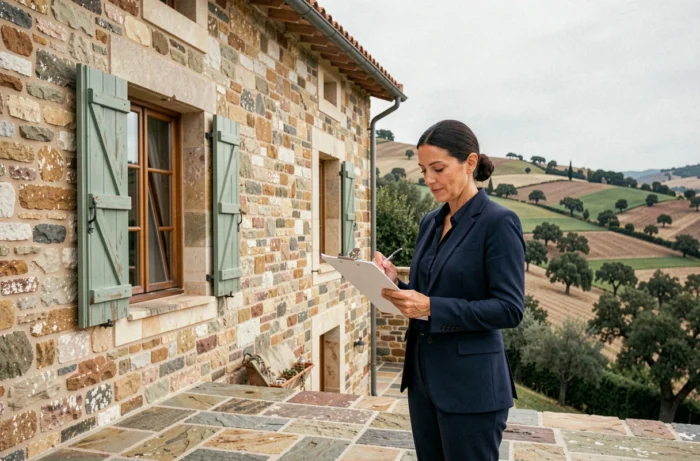
A residential hillside without nearby commerce, without a bakery, without a café, signals a fundamental problem. The commercial vacancy of the neighboring town center is a reliable indicator of the neighborhood’s strength. If the metal shutters remain down at the bottom of the hill, the rental demand at the top will be weak.
We are not talking about the presence of a supermarket ten minutes away by car. We are talking about real activity: a weekly market, open food shops, medical services accessible by foot or transport. These elements retain residents and attract long-term tenants.
What to check on-site
- The occupancy rate of commercial premises in the town or the neighborhood at the foot of the hill, counting the empty storefronts on the main street
- The frequency and diversity of transport (bus, shuttle, planned tram line) connecting the hillside to the city center or employment areas
- The presence of urban development projects available at the town hall: creation of soft pathways, rehabilitation of public spaces, installation of sports or cultural facilities
These signals do not appear in any advertisement. They are gathered by walking through the neighborhood on a Tuesday morning, not a Saturday market day.
Soil constraints and natural risks on sloped land
The hills are appealing for their relief and panoramas. This relief has a technical cost that many underestimate. A sloped plot exposes one to stability issues (landslides, shrink-swell of clays) and stormwater management challenges that flat lands do not face.
The natural risk prevention plan (PPRn) of the municipality is the first document to consult. It delineates buildable areas, moderately risky zones, and non-buildable areas. A property located in an orange or red zone will see its value capped, regardless of the quality of the view.
Since January 1, 2023, the risk of coastal erosion must be displayed in real estate advertisements. For hills close to the coast, this obligation alters the reading of the heritage potential: an attractive property may be burdened by a long-term regulatory constraint that hinders resale.
Anticipating work costs
On a hillside, renovation is not limited to the kitchen and bathroom. Earthworks, peripheral drainage, and foundation consolidation often represent the first budget item. Feedback varies on this point depending on the soil type, but it is noted that these costs regularly surprise first-time investors.
A geotechnical diagnosis (G1 or G2 study) before purchase allows for quantifying the risk. On a clayey hillside, this document may reveal the need for micropiles or deep foundations, which completely changes the financial equation.
Rental yield on the hills: calculating with the right data
The gross yield displayed by estimation platforms does not take into account the specificities of a hillside property. Co-ownership charges, recurring works, and local taxation must be included in the calculation from the outset.
A property with an attractive purchase price but high annual charges (maintenance of sloped green spaces, lighting of access paths, increased co-ownership insurance) may show a net yield much lower than expected. It is recommended to request the co-ownership’s projected budget and compare it with equivalent residences on flat land.
The rental demand also depends on the target tenant profile. A hillside close to a university town or an employment area does not have the same potential as an isolated hillside in a rural area, even if the price per square meter is lower. The lifestyle sought by tenants (proximity to transport, shops, schools) takes precedence over the scenic setting.
- Check the rental vacancy rate in the area with the local housing observatory or the town hall
- Compare rents charged on similar properties in a nearby radius, distinguishing between furnished and unfurnished
- Incorporate any rental restrictions (rent controls, tourist quotas, co-ownership regulations) into the yield projection
Real estate investment on the hills remains a bet on the appreciation of heritage in the medium term. Immediate rental yield may be modest, but the capital gain upon resale often compensates, provided that the property was purchased at the right price and without hidden defects in the soil or in the statutes.
The difference between a good and a bad investment on a hillside rarely hinges on the view. It hinges on the documents one has taken the time to read.