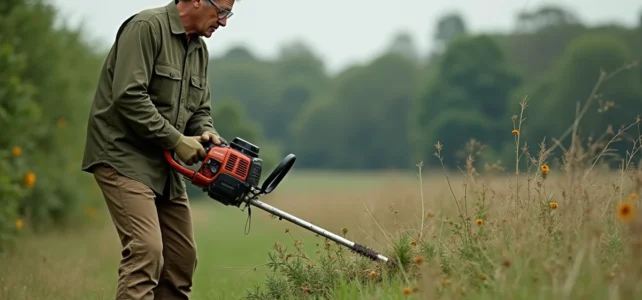
String trimmers and brush cutters share a similar silhouette: a handle, a motor, a rotating cutting system. This resemblance explains the frequent confusion between the two tools. However, their mechanical design, motorization, and cutting capabilities are intended for very different tasks in garden or land maintenance.
Motorization and cutting system: what really separates the two machines
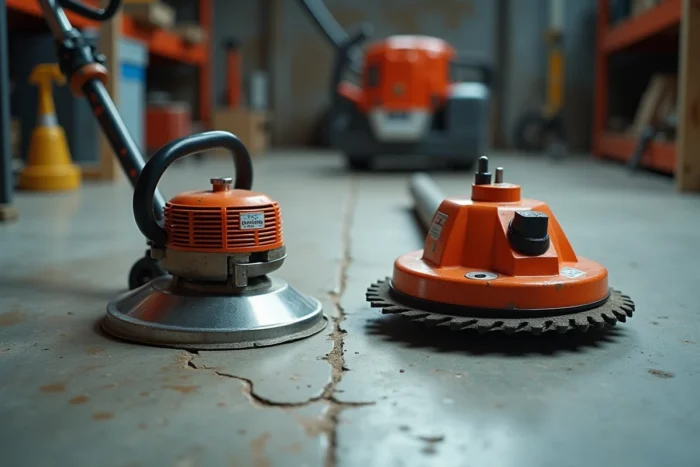
The string trimmer operates with a nylon line that spins at high speed to cut soft grasses. This replaceable line intentionally limits the cutting power. The tool is designed for finishing touches after mowing: along walls, around flower beds, between slabs.
The brush cutter features a more powerful motor and accepts several types of cutting tools: reinforced line, steel blade, three or four-tooth knife. This versatility allows it to tackle dense vegetation, brambles, woody undergrowth, and even young shrubs. The steel blade makes all the difference in difficult terrain.
On the motorization side, string trimmers come in corded electric, battery-operated, or gas versions. Brush cutters are predominantly gas-powered for professional use, although battery models are progressing. The question of the difference between string trimmer and brush cutter primarily hinges on the relationship between motor power and cutting tool.
Weight, maneuverability, and fatigue: the often underestimated ergonomic factor
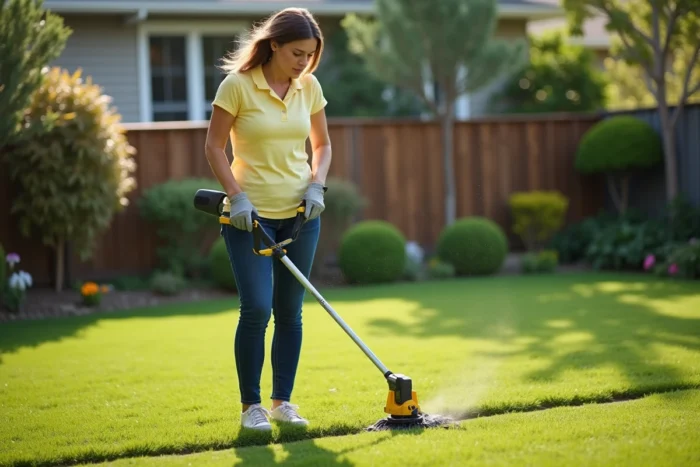
A string trimmer generally weighs much less than a brush cutter. This lightness facilitates the swinging movements necessary to edge a border or navigate around an obstacle. During a finishing session of about twenty minutes, fatigue remains moderate.
The brush cutter, heavier due to its motor and reinforced cutting system, often requires a carrying harness. This harness distributes the weight across the shoulders and back, but prolonged work remains physically demanding. Landscaping professionals are well aware of this constraint and adjust their sessions accordingly.
Ergonomics also influences the precision of the action. The lightweight and maneuverable string trimmer allows for fine work near delicate plants or fences. The brush cutter, more difficult to handle with precision, excels on large areas where cutting finesse is less important than raw efficiency.
Battery or gas: the shift occurring over the past few years
The market for battery-powered garden tools has seen notable growth in recent years. For string trimmers, battery power is now a common choice for domestic use. Instant starting, low noise nuisance in residential areas, and the lack of engine maintenance (oil changes, spark plugs, filters) make it a practical tool for modest-sized gardens.
For brush cutters, the transition to battery power poses a practical problem. Battery life is often insufficient for intensive clearing on large areas. A user faced with overgrown land will need to plan for multiple batteries or accept frequent interruptions. Field reports vary on this point: some recent models offer decent battery life for occasional use, while others disappoint during extended sessions.
Gas power thus retains a clear advantage for brush cutters used on large properties or in professional settings. However, the gas string trimmer is gradually losing its appeal compared to battery models, except for very specific uses requiring unlimited autonomy.
Criteria for choosing between battery and gas
- Area to be treated: beyond a few hundred square meters of undergrowth, gas remains more enduring for brush cutters
- Neighboring constraints: battery models generate significantly less noise, which matters in subdivisions or condominiums
- Maintenance budget: a gas engine requires oil changes, filters, and spark plugs, whereas the battery requires almost no mechanical maintenance
- Frequency of use: for monthly finishing work, the battery is more than sufficient for a string trimmer
Clearing obligation and choosing the right tool
In areas classified as at risk of forest fires, property owners are subject to a legal obligation to clear vegetation around their homes. This regulatory framework requires the removal of combustible vegetation within a defined perimeter. A string trimmer is not sufficient for this type of work: tall grasses, brambles, and shrub regrowth require the power of a brush cutter equipped with an appropriate blade.
Reasoned clearing aims to limit fire risks while preserving part of the biodiversity. Recent guidelines recommend not clearing all vegetation but targeting combustible layers. The brush cutter, with its various interchangeable cutting tools, allows for this selective approach that a simple string trimmer cannot offer.
String trimmer or brush cutter: comparative table of uses
| Criterion | String Trimmer | Brush Cutter |
|---|---|---|
| Type of vegetation | Soft grass, light regrowth | Brambles, undergrowth, young shrubs |
| Cutting tool | Nylon line | Reinforced line, steel blade, knife |
| Weight | Light | Heavier, harness often necessary |
| Dominant motorization | Battery or electric | Gas (battery models progressing) |
| Main use | Finishing touches after mowing | Clearing, land maintenance |
| Precision | High | Medium |
The two tools do not replace each other. The string trimmer complements the mower, while the brush cutter replaces it on inaccessible terrains. For a classic garden with maintained lawn, the string trimmer is sufficient in most cases. As soon as the terrain presents overgrown areas, encroaching slopes, or a regulatory obligation for clearing, the brush cutter becomes the appropriate tool.
Some manufacturers offer versatile models with interchangeable heads, but the compromises in terms of weight and power often limit the appeal of these hybrid solutions. It’s better to have two well-sized tools than one that does everything halfway.