
Ingrid Betancourt has been living in Paris for several years. A former Colombian senator and ex-hostage of the FARC for over six years, she has rebuilt her life far from Bogota. Her enduring French connection raises a less obvious question: how to maintain real political weight in a country where one no longer resides on a daily basis.
Paris as a sustainable base for Ingrid Betancourt
After her release in 2008, Ingrid Betancourt first went through a period of study at Oxford in England, where she pursued a theology program. This phase marked a desire for both geographical and psychological distance from Colombia and political life.
Several recent sources now describe Paris as her main anchor point. The French capital is no longer just a place of transit or convalescence. It is where she has established her family and personal roots while maintaining back-and-forth trips to Colombia.
To better understand where Ingrid Betancourt lives in 2024, it is essential to place this choice in the context of a reconstruction that took years. The loss of her family references during captivity (her children had grown up, her father had passed away, her relationship had not survived) made returning to Colombia less natural than one might assume.
This choice of Paris is not insignificant symbolically. France played a diplomatic role during her captivity, and Nicolas Sarkozy welcomed her at Villacoublay on the day of her return to Europe. This connection to France predates her settlement there.

Colombian political influence from France: the levers of Ingrid Betancourt
Living in Paris has not extinguished Ingrid Betancourt’s political engagement. In 2022, she ran for the Colombian presidential election before withdrawing. More recently, she continues to speak publicly about the politics of her home country.
In 2026, for example, she sent a public letter to Abelardo de la Espriella requesting that the heroes of Operation Jaque, the military operation that led to her release, be honored. This type of intervention shows that she uses specific channels to weigh in on the Colombian debate:
- Open letters addressed to Colombian public figures, relayed by local press (Semana, El País de Cali)
- Positions on the current president’s policies, including forward-looking analyses on the post-term future of leaders like Gustavo Petro
- The status of former presidential candidate, which gives her enduring media legitimacy among Spanish-speaking media
Her influence relies on media visibility rather than a partisan apparatus. She does not lead any structured political movement in Colombia. The Green Oxygen Party, which she co-founded in the 1990s, is no longer an active electoral vehicle for her.
This position of an engaged commentator from abroad presents obvious limitations. Without a ground presence, without a local team, and without a mandate, the concrete impact on Colombian political decisions remains difficult to measure. Field reports diverge on this point: some Colombian observers believe she retains a moral aura, while others feel that her distance has gradually marginalized her in the local political landscape.
Private life in Paris: discretion and family reconstruction
Ingrid Betancourt has always protected her private life after her release. The information available about her daily life in Paris remains fragmented, contrasting with the media overexposure she experienced between 2002 and 2010.
Her personal reconstruction has been marked by the need to reconnect with her children, Lorenzo and Mélanie, whom she left as teenagers and found as adults. This family fracture has shaped her life choices after captivity. In her own words, published in Même le silence a une fin (reissued by Folio), she described this reconstruction as “titanic.”
The choice of Paris also offers a practical advantage: a sufficient distance from Colombia to avoid being caught up in the local political cycle, while remaining connected through French-speaking and Spanish-speaking media and diplomatic networks.
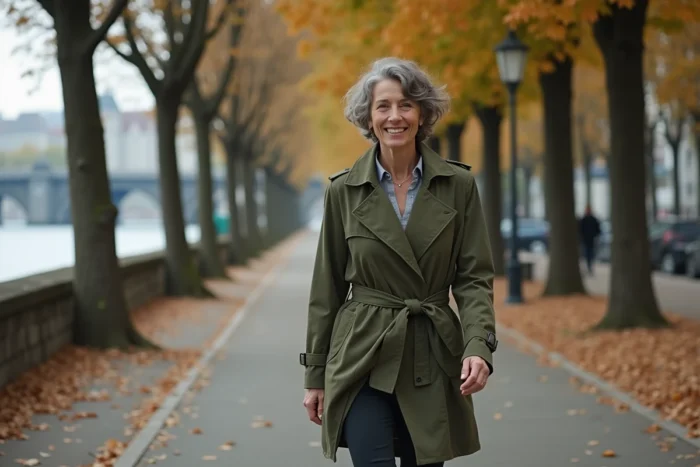
Ingrid Betancourt in 2024: an international advocacy figure
Her public image has evolved into that of an advocacy figure, rather than that of an ex-hostage or a candidate. This transition has occurred gradually over about fifteen years.
Ingrid Betancourt’s recent interventions focus less on Colombian electoral issues and more on questions of memory, justice, and recognition of the victims of the armed conflict. Her request to honor the heroes of Operation Jaque fits into this logic: she seeks to establish a historical narrative, not to win votes.
This stance presents a paradox. She derives her legitimacy from a Colombian experience but exercises it from a French framework. International media seek her out as a former hostage and ex-senator, two statuses that do not require Colombian residency to be invoked.
The available data does not allow for conclusions about the actual extent of her audience in Colombia today. Colombian press articles regularly mention her, but media coverage does not always reflect effective political influence.
What emerges is an atypical path in the Latin American political landscape: that of a leader who has chosen not to return, without cutting ties. Paris serves as a rear base, a place where geographical distance becomes a positioning tool rather than a handicap. The model remains fragile, dependent on media coverage and the collective memory surrounding her captivity.