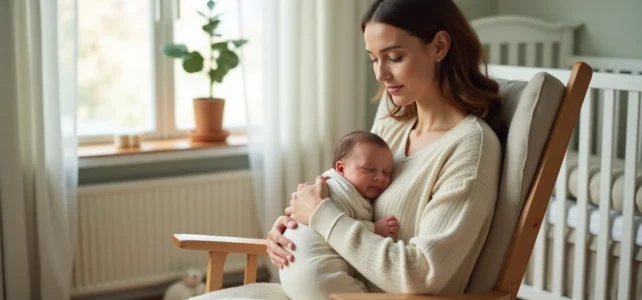
Your baby doesn’t need half of the items you’ll find on traditional baby registry lists. What they need are age-appropriate gestures, a safe environment, and parents who can distinguish between the essential and the superfluous. Taking good care of a baby relies on a few simple fundamentals, provided you truly master them.
Baby care without gadgets: the important gestures by age
Have you noticed that some parents accumulate accessories while others manage with almost nothing? The difference rarely lies in the budget. It comes down to knowing the appropriate gestures for each stage.
During the first month, a newborn has three fundamental needs: to eat, to sleep safely, and to stay clean. For feeding, breast or bottle is sufficient. For sleep, a firm crib with a hard mattress covers the essentials. For hygiene, a warm water source, cotton, and saline solution replace most products sold in pharmacies.
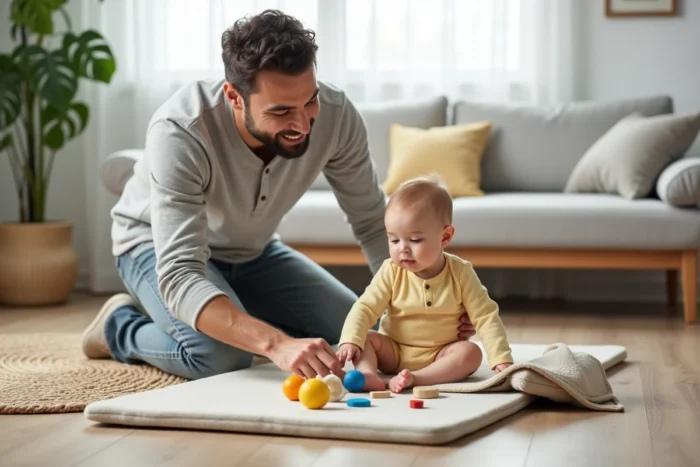
From three months onward, the baby starts to explore with their hands. A mat on the floor and two or three objects of different textures are better than a playpen filled with electronic toys. Prioritizing free motor skills avoids unnecessary purchases.
Around six months, complementary feeding begins. A standard blender, a soft spoon, and a few containers are enough. Specialized “baby” food processors do exactly the same thing as a standard appliance, but at a much higher price. Before you equip yourself, you can discover the new products from Vive Mon Bébé to identify what truly deserves your attention.
Temperature and season: adapting the environment without multiplying equipment
The baby’s room ideally should not exceed 19 to 20 degrees. This simple data alone prevents several purchases: a silent fan in summer and a season-appropriate sleeping bag cover most situations.
In winter, a thick sleeping bag replaces a duvet, blanket, and bumper, three items that are discouraged for the safety of the infant. In summer, a light bodysuit and a thin sleeping bag are sufficient. No need for a connected thermometer in the room: a hand placed on the baby’s neck quickly indicates if they are too hot or too cold.
For outings, the principle remains the same: layer clothing instead of multiplying accessories. A snowsuit in winter, a hat, and an anti-UV fabric for the stroller in summer. Heated covers, high-end sleeping bags, and technical over-covers are options, not necessities.
Ventilate even in winter
Opening the windows for about fifteen minutes a day, all year round, renews the air in the room. Humidification can be achieved with a simple container of water placed near the radiator, changed regularly. Electric humidifiers can be useful in very dry homes, but they are not on the list of priority gestures.
Nasal hygiene and daily care: technique over material
Why do so many parents buy electric nasal aspirators when a well-done nasal wash works better? According to Familiprix recommendations, nasal irrigation should be adapted to the baby’s age: lying on their side in the first months, then sitting up from around six months.
The gesture requires saline solution in single-use packets, a bit of practice, and above all, clean hands. Washing hands before and after each care remains the most effective hygiene measure, far ahead of any antibacterial accessory.
For daily care, here are the truly useful gestures:
- Clean the face with a damp cotton pad every morning, gently wiping the eyes (from the inner corner to the outer), the nose, and the ears (only the outer ear, never the canal).
- Change the diaper as soon as it is soiled, cleaning from front to back, with warm water and mild soap or liniment.
- Monitor the umbilical cord until it falls off (generally between five and fifteen days) by keeping it clean and dry, without applying antiseptic unless advised by a doctor.
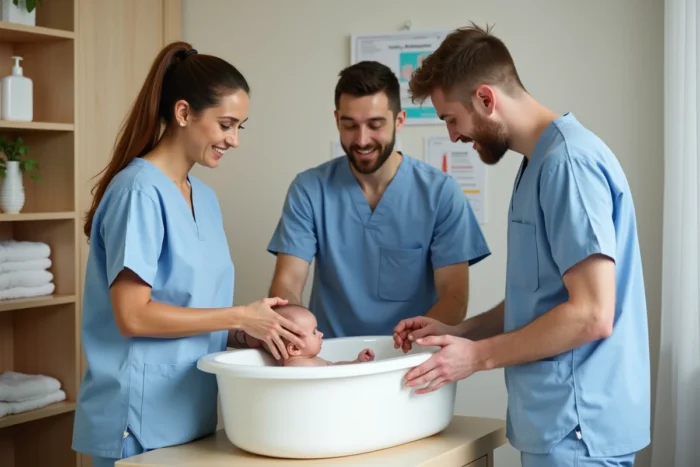
A bath every two or three days is sufficient for a newborn. Daily bathing is not a medical obligation, and it can even dry out the fragile skin of the infant.
Safe sleep for infants: what truly protects
Sleeping arrangements are where mistakes can be most costly, and where the right gesture costs nothing. Putting the baby to sleep on their back, alone in their crib, without a pillow or duvet: this simple rule is the foundation of preventing sudden infant death syndrome.
The mattress must be firm and perfectly fitted to the dimensions of the crib, with no space between the edge of the mattress and the walls. Accessories like bed reducers, positioning cushions, or baby wedges are not only unnecessary but potentially dangerous.
The sleeping bag (or sleep sack) in the right size replaces any blanket. Here’s how to choose:
- In summer or in a room over 22 degrees, a light sleeping bag made of fine cotton.
- In mid-season (18 to 21 degrees), a classic padded sleeping bag.
- In winter or in a cool room (below 18 degrees), a thick sleeping bag combined with a velour pajama.
Connected respiratory monitors reassure some parents, but no official recommendation places them among preventive devices. Adhering to sleep rules remains more protective than any sensor.
Baby’s awakening: fewer toys, more interaction
A baby a few weeks old needs no toys. Your face, your voice, and skin-to-skin contact are their first sources of stimulation. Mobiles, play arches, and rattles come gradually as their vision and coordination develop.
A simple play mat on the floor allows them to move freely around four months. Bouncers and swings limit their movements and delay their motor skills if used for too long. A few minutes of free movement on the floor are worth more than an hour in a bouncer.
The best investment for a baby’s awakening is not found in stores. Talking to the baby during care, describing what you are doing, singing, carrying them: these free interactions build their development much more solidly than a catalog of educational toys. Equipment should complement, never replace, human connection.