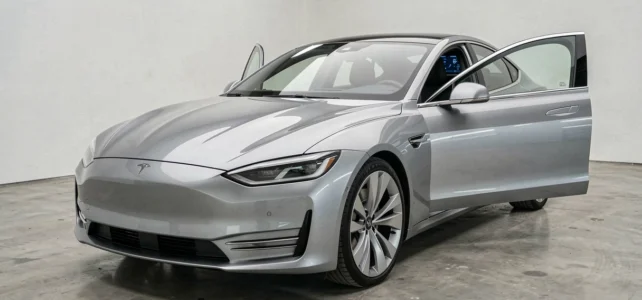
The European automotive market entered 2024 in a state of tension rarely observed. New car registrations in France declined, sales of battery electric vehicles stagnated across the continent, and manufacturers found themselves caught between tightened regulatory targets and demand that did not meet expectations. Far from the linear narrative of a smooth transition to electric, 2024 highlighted the contradictions of a sector undergoing significant restructuring.
CO2 Targets for Manufacturers: The Regulatory Constraint That Changes Everything in 2025
Articles on automotive trends in 2024 rarely mention the framework that determines manufacturers’ industrial choices. However, European regulation 2019/631 imposes a trajectory for reducing average CO2 emissions for all passenger cars sold by each brand.
Starting in 2025, the average cap will drop to around 93 to 94 g of CO2/km in the WLTP cycle for passenger cars, compared to a significantly more permissive threshold in previous years. This step is the steepest before the 2030 deadline, when requirements will become drastically more stringent.
For manufacturers, the consequence is direct: each internal combustion vehicle sold weighs on the fleet average. Those who have not sold enough electric or plug-in hybrid vehicles will face fines calculated per excess gram and per registered car. This mechanism explains the proliferation of mild hybrid offers and aggressive promotions on electric models observed at the end of 2024.
Following the latest automotive news on Autour 2 Moi allows one to see how these constraints impact the ranges offered to consumers.
Electric Vehicle Sales in Europe: The Slowdown of 2024
The prevailing narrative presented 2024 as the year of electric acceleration. However, data published by ACEA tells a different story. The market share of battery electric vehicles experienced a slight but documented decline in European registrations.
Several overlapping factors contribute to this:
- The end or reduction of certain purchase incentives in key markets, including France with the tightening of the ecological bonus, has slowed sales among modest households.
- The average price of new electric vehicles remains significantly higher than that of thermal or hybrid equivalents, despite price reductions on some Chinese models.
- The public charging network is progressing, but in a heterogeneous manner across countries and roadways, which maintains a form of range anxiety among potential buyers.
The European Environment Agency also highlighted a stagnation in the average emissions reductions of new cars sold in 2024. The paradox is clear: manufacturers are multiplying zero-emission models, but the share of thermal and non-rechargeable hybrids sold offsets these efforts in the overall balance.
Hybrids and Mild Hybrids: The Powertrain Benefiting from Uncertainty
In this context, conventional hybrids and mild hybrids captured an increasing share of sales in 2024. For a hesitant buyer facing the cost of a 100% electric vehicle, the hybrid represents a compromise perceived as more reassuring: no dependence on charging stations, reduced consumption, and an intermediate acquisition price.
European manufacturers have largely fueled this trend. Brands like Mercedes and Peugeot have expanded their hybrid ranges, offering mild hybrid versions across segments from city cars to compact SUVs. The hybrid has become the buffer of the transition for brands that need to lower their average emissions without solely relying on electric vehicle sales.
However, this strategy raises a medium-term question. Non-rechargeable hybrids still emit well above the target cap for 2030. Their current commercial success could delay the shift to zero emissions while providing manufacturers with temporary relief on their fleet balances.
Chinese Brands in the European Market: A Shifting Balance of Power
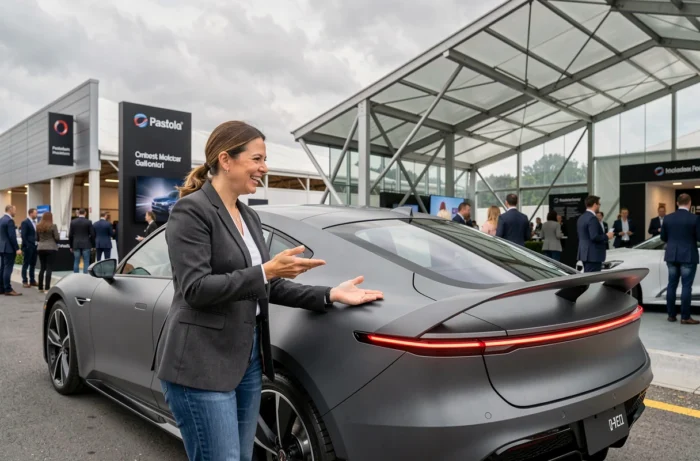
2024 confirmed the rise of Chinese manufacturers in the European automotive market. Brands like BYD and MG have increased their visibility at trade shows and dealerships, offering electric vehicles at significantly lower prices than those of historical manufacturers.
This pricing pressure has prompted a political reaction. The European Union has initiated investigations into the subsidies granted by Beijing to its manufacturers, implementing additional tariffs on electric vehicles imported from China. The European automotive market has become a battleground for international trade negotiations, directly affecting consumer choices.
For buyers, the concrete consequence is twofold. On one hand, Chinese competition drives prices down in the electric segment. On the other hand, customs surcharges may reduce this advantage. Field reports diverge on this point: some Chinese models offer an attractive equipment-price ratio, while questions about long-term reliability and resale value remain open.
Automotive Innovations 2024: Connectivity and Driver Assistance in Daily Life
Beyond powertrains, innovations in 2024 focused on the cabin and driver assistance. Level 2 driver assistance systems (lane keeping, emergency autonomous braking, adaptive cruise control) have become widespread in mid-price segments, where they were previously reserved for high-end sedans.
Embedded connectivity has become a purchase criterion on par with powertrains. Over-the-air software updates, deep integration of smartphones, predictive navigation powered by real-time data: these features are no longer innovations but standards expected by buyers of new vehicles in 2024.
The available data does not yet allow for measuring the real impact of these technologies on road safety at a large scale. Their massive deployment in the vehicle fleet will take several years, as recent vehicles gradually replace older models.
Ultimately, 2024 revealed an automotive sector caught between contradictory injunctions: demanding European regulations, cautious consumer demand, and international competition reshuffling the cards. The choices made by manufacturers regarding their 2025 ranges will determine whether the hybrid compromise was a stepping stone or a hindrance.